
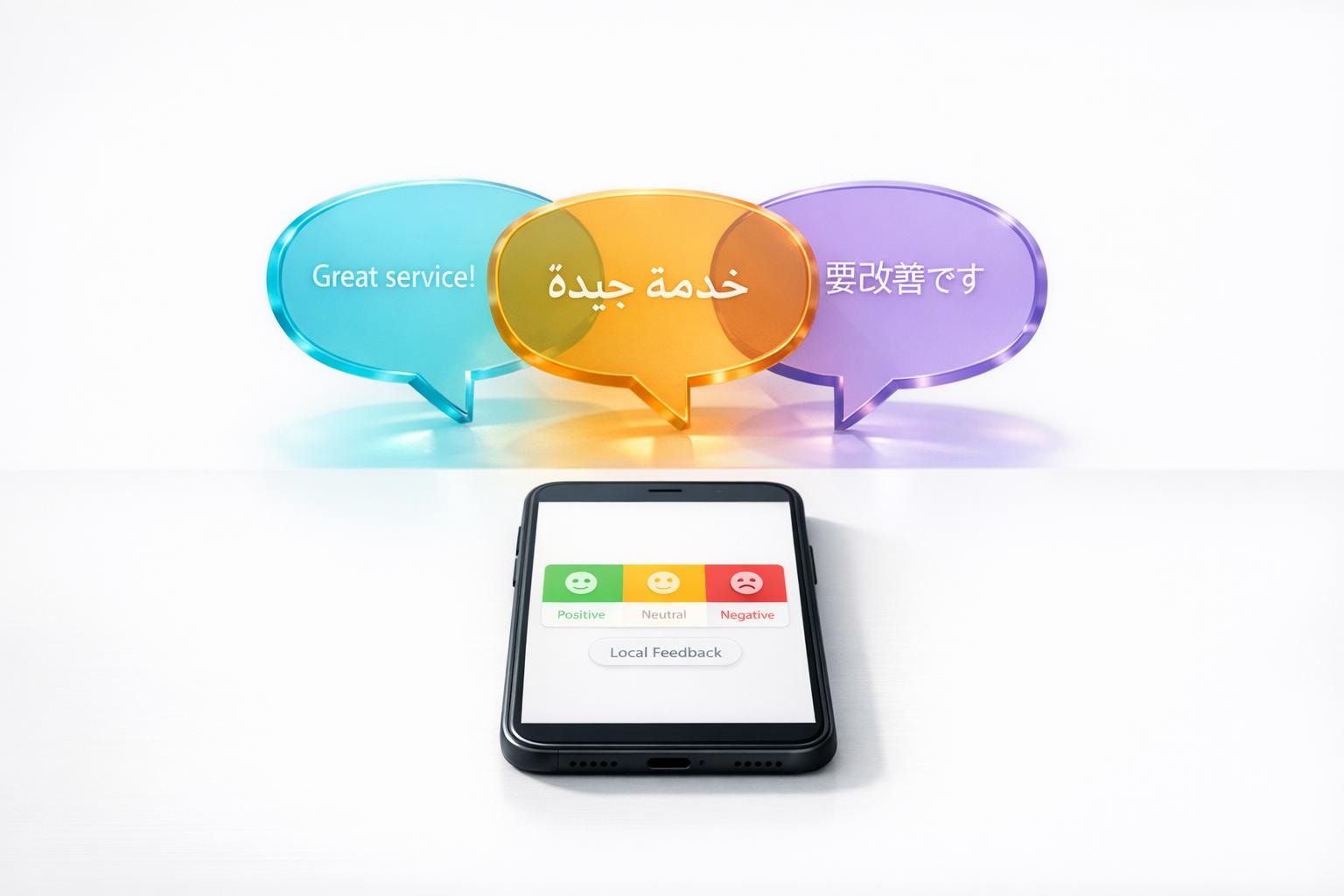
Top Tools for Collecting Local AI Feedback
Find platforms that capture feedback in 40+ languages and boost customer satisfaction by 10% with smart sentiment analysis.

Written by
Adam Stewart
Key Points
- Reach 40% more customers with multilingual tools that speak their language
- Cut feedback response time by 80% with automated routing systems
- Reduce churn by 5% using AI sentiment and intent detection
- Handle regional dialects and code-switching beyond basic translation
AI systems often perform differently across regions due to variations in language, behavior, and expectations. To address this, businesses need tools that collect feedback tailored to local nuances. These tools help pinpoint issues, improve customer experiences, and prevent churn. Here's what to prioritize:
- Multilingual Support: Ensure feedback is gathered in customers' native languages, including handling dialects and code-switching.
- Sentiment Analysis & Intent Detection: Go beyond numbers to understand emotions and categorize feedback using best practices for AI feedback analysis.
- Ease of Integration: Choose tools that seamlessly connect with existing CRMs, helpdesks, and collaboration platforms.
Top Tools:
- Canny: Ideal for feature requests and roadmaps with multilingual grouping.
- Zendesk AI: Excels in sentiment analysis across 100+ languages.
- NICE Voice of the Customer: Strong in multi-channel feedback like voice, email, and SMS.
- Help Scout: Great for small teams with AI-driven sentiment detection.
- Dialzara: Focuses on voice feedback with AI agents for deeper insights.
These tools simplify feedback collection and analysis, helping businesses respond quickly to local needs and improve customer satisfaction.
What to Look for in Local AI Feedback Tools
When it comes to local AI feedback tools, the best options do more than just collect survey responses - they dig deeper. These tools should be able to pick up on the subtleties of language, emotion, and local context, ensuring that every piece of feedback contributes to smarter AI-driven insights. Why is this important? Because regional differences can make or break your ability to understand and act on customer feedback. To succeed, you need tools that don’t just skim the surface but offer meaningful insights without requiring a team of data scientists to decode them.
Let’s explore three key features that define effective local AI feedback tools.
Multilingual Support
If your business operates in diverse communities, limiting feedback collection to English can leave you with major blind spots. In fact, 40% of consumers won’t even consider making a purchase if a website doesn’t offer content in their language [9]. The same logic applies to feedback - if customers can’t express themselves in their preferred language, you’re losing valuable insights and potentially alienating entire customer segments.
The best tools go beyond simple translation. They detect language, intent, and context within customer interactions, minimizing what experts call "translation friction" [8][10]. This is especially critical when you consider that 75% of U.S. consumers would only spend up to $500 with a brand that doesn’t provide native-language support [8]. Advanced tools even handle code-switching (where customers switch languages mid-conversation) and regional dialects, ensuring you’re capturing the full picture of customer intent [11].
Real-time language detection is another must-have. Tools that require customers to manually select a language create unnecessary barriers. With 64% of consumers willing to pay more for brands that support their native language [8], investing in robust multilingual capabilities can lead to increased loyalty and lower churn rates.
But language is just one piece of the puzzle - understanding how customers feel and what they want is equally important.
Sentiment Analysis and Intent Detection
Customer feedback isn’t just about numbers. Ratings and scores only scratch the surface. The real value lies in understanding the emotions and intentions behind those numbers. Advanced AI tools can interpret tone, urgency, and emotional intensity through AI survey analysis - whether it’s frustration, confusion, or excitement - to identify issues that might otherwise go unnoticed [4][1].
Sentiment analysis acts like an early warning system. If negative sentiment spikes in a specific area, it could point to a local service issue, a misunderstanding, or even a problem with how your AI performs in that region [6]. But sentiment alone isn’t enough. Tools with intent detection automatically categorize feedback into actionable buckets like bug reports, feature requests, or churn risks [7]. This makes it easier to prioritize and route feedback to the right teams, ensuring urgent problems are addressed quickly while other suggestions feed into long-term planning.
Using AI feedback tools effectively can lead to a 5% reduction in churn and a 10% increase in customer satisfaction (CSAT) [5]. But these results only happen if the tool can accurately identify and prioritize what matters most.
Once language and sentiment are under control, the next step is ensuring the tool fits seamlessly into your existing systems.
Easy Integration and Setup
A feedback tool that doesn’t integrate with your current systems can create more headaches than it solves. That’s why it’s essential to choose tools that connect directly with your CRM (like Salesforce or HubSpot), helpdesk software (such as Zendesk or Intercom), and collaboration platforms (like Slack or Microsoft Teams) [4][5]. When feedback flows effortlessly into the tools your team already uses, you can act on it faster.
Companies using AI-powered feedback solutions have reported an 80% faster cycle from insight to action [5]. This speed is largely thanks to automation. The best tools offer features like closed-loop automation, which routes negative feedback or urgent issues to the right person immediately [5][1].
No-code builders and AI-assisted survey tools also make setup a breeze. Instead of waiting months to get started, teams can begin collecting feedback in just a few days [6][3]. With 58% of product teams incorporating AI into their workflows by 2026 [1], tools that support automation platforms like Zapier, Make, or Webhooks are becoming essential. These integrations allow you to create custom triggers across thousands of apps without needing a developer [1][4].
sbb-itb-ef0082b
Top Tools for Collecting Local AI Feedback
Here’s a look at some standout tools designed to transform raw feedback into actionable insights. Each tool has its own strengths, whether it’s sentiment analysis, multichannel feedback collection, or seamless integration with existing systems. Choosing the right one depends on your goals, but these platforms excel at turning customer input into meaningful changes.
Canny
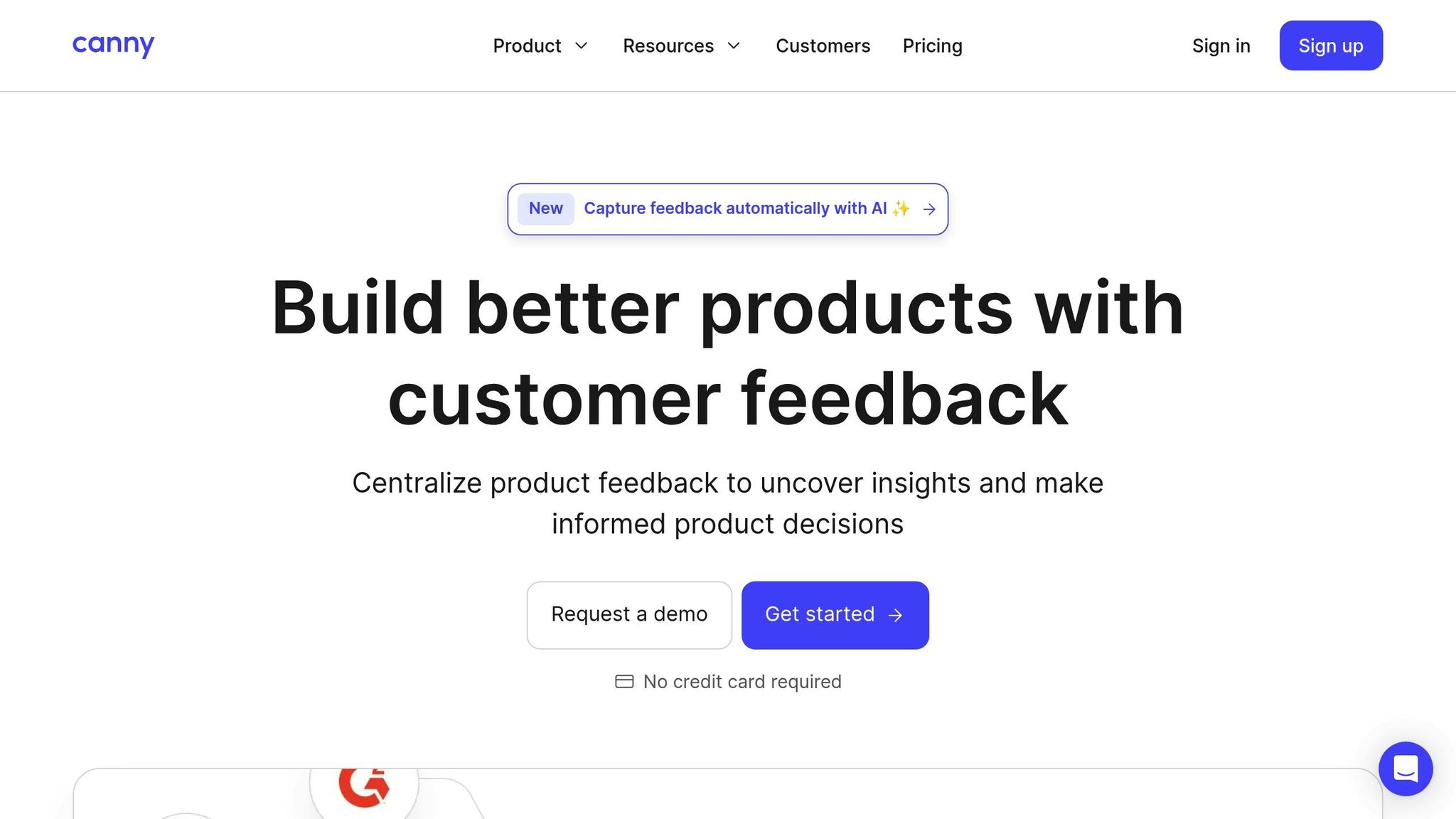
Canny shines when it comes to public feedback portals. Customers can submit, vote on, and discuss feature requests, giving teams a clear view of what matters most. The platform automatically groups similar requests from different regions, simplifying roadmap planning. With support for multilingual feedback tools and integration with popular support tools, it’s easy to pinpoint localized concerns. Canny’s voting system and changelog also ensure customers stay informed about updates, creating a transparent feedback loop.
Zendesk AI
Zendesk AI takes customer interactions to the next level by analyzing sentiment and intent in over 100 languages. This multilingual sentiment analysis detects emotional nuances - whether feedback is positive or negative - helping teams identify regional issues before they grow. Automated post-interaction surveys capture immediate insights, while the analytics dashboard breaks down data by region. This combination of sentiment detection and real-time feedback makes Zendesk AI a powerful tool for understanding customer needs.
NICE Voice of the Customer
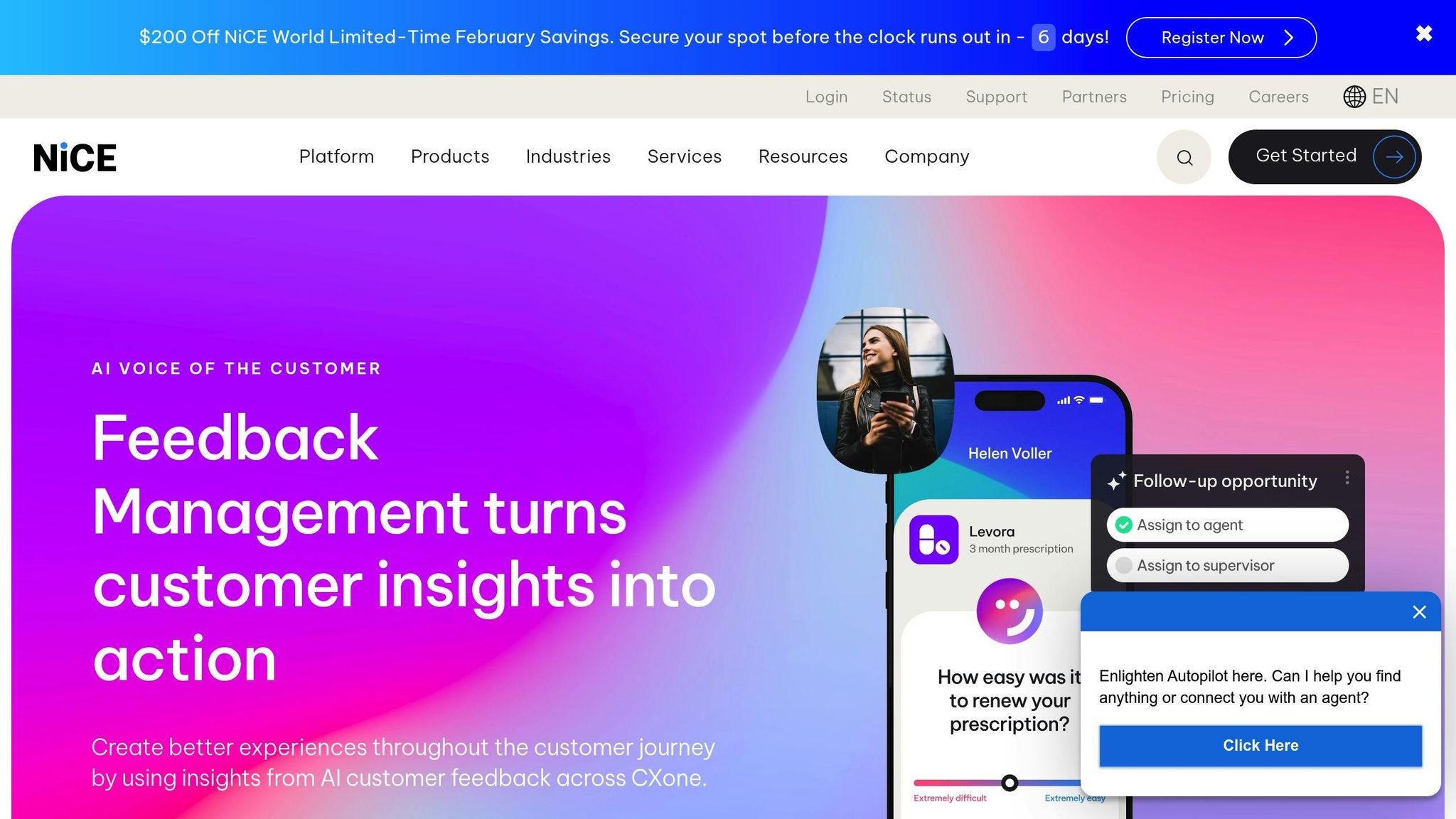
NICE Voice of the Customer excels in collecting feedback across multiple channels, including voice, email, and SMS, in local languages. Real-time surveys after interactions ensure timely insights, which are automatically routed to the right teams. The platform’s AI analyzes unstructured feedback, grouping responses into localized themes like billing issues or onboarding challenges. With entity recognition, feedback is mapped to specific products, features, or locations, providing detailed insights to resolve regional pain points quickly.
Help Scout
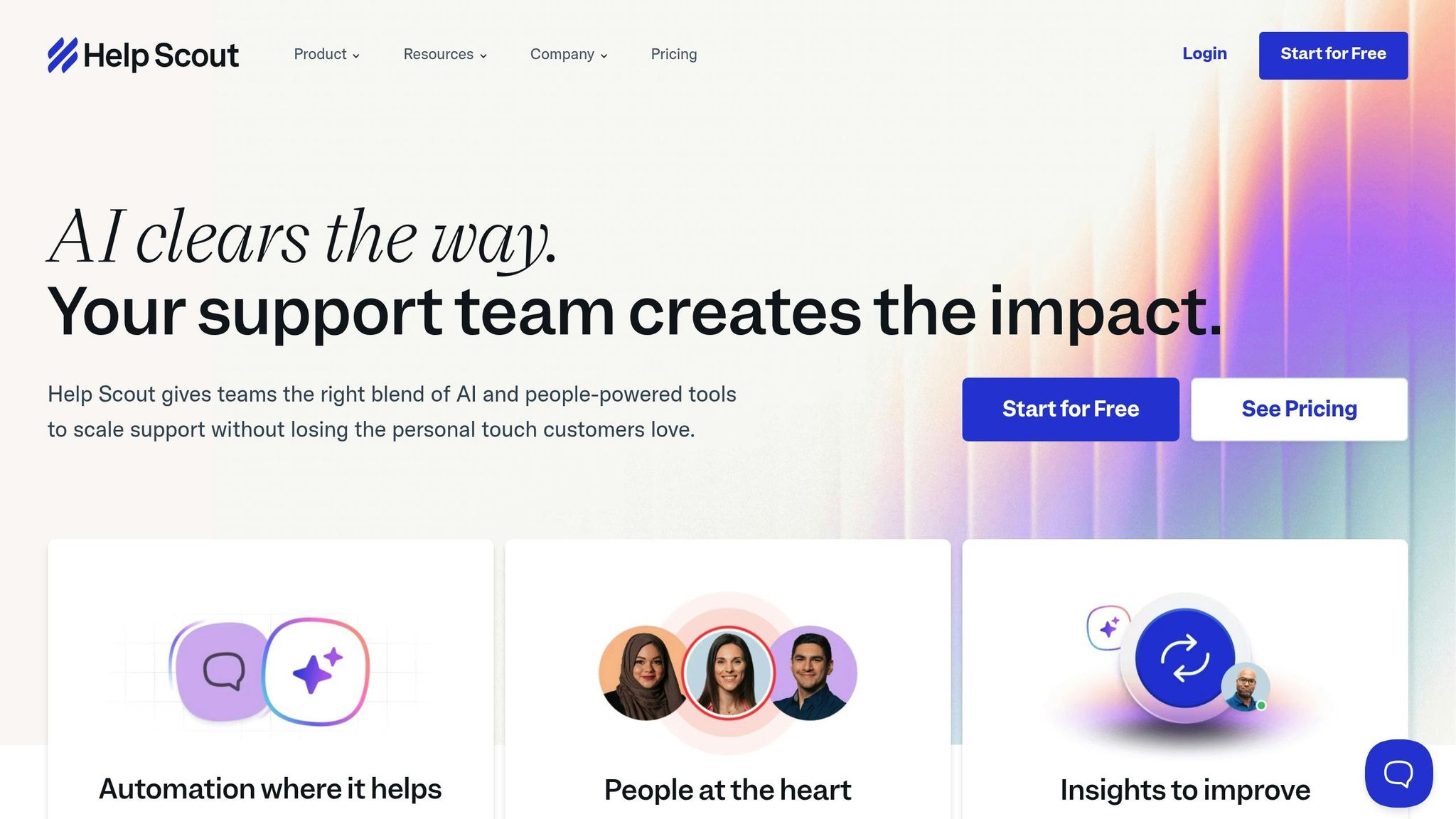
Help Scout blends a shared inbox with AI-driven multilingual support, making it simple for teams to address local concerns. Its AI can detect the language of incoming messages and analyze sentiment, flagging urgent issues for immediate action. Thematic clustering organizes similar complaints into trends, helping teams spot recurring problems in specific areas. With integrations that connect seamlessly to various business tools, Help Scout ensures feedback is incorporated into existing workflows effortlessly.
Dialzara
Dialzara captures rich, detailed feedback through natural voice interactions with lifelike AI agents. This method works well for customers who prefer phone communication, often uncovering deeper insights. The AI agents are trained to understand industry-specific terms and adapt to regional engagement styles, ensuring personalized interactions. Available 24/7, Dialzara collects feedback across time zones without needing staff on call. With integrations for over 5,000 business applications, it automatically routes insights into tools like CRMs or helpdesk systems. Setting up is straightforward - create an account, train your AI phone agent by answering a few questions, choose a voice and phone number, and you’re ready to go. The AI agent can handle client intake, book appointments, and gather detailed feedback, all while maintaining a natural, conversational tone.
Feedback Tool Comparison
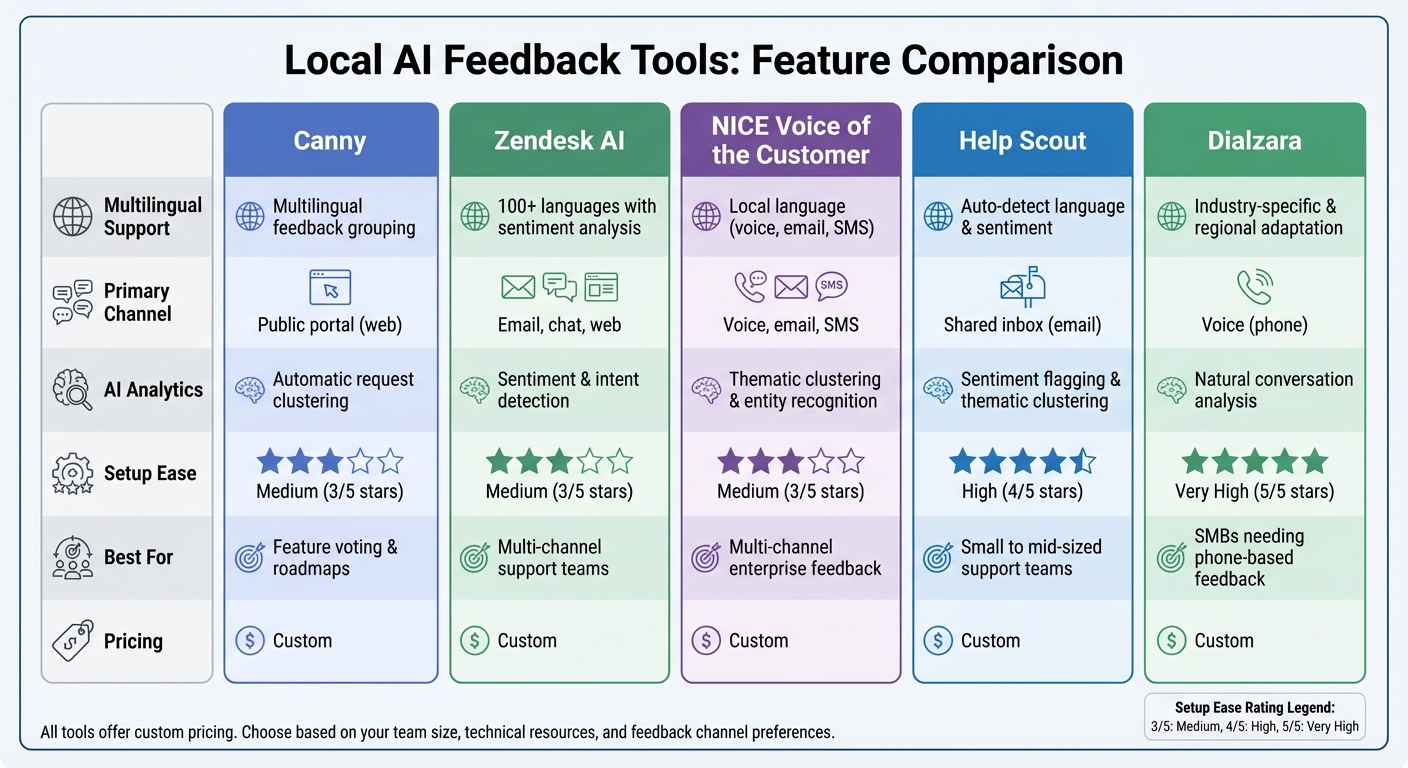
Local AI Feedback Tools Comparison: Features, Channels, and Best Use Cases
Selecting the right feedback tool hinges on factors like your team's size, available technical resources, and the depth of analysis you need for local responses. Some tools are ideal for small businesses looking for quick deployment, while others are designed to handle large-scale data analysis with advanced AI capabilities. Features like multilingual support, ease of setup, and integration options can significantly impact how efficiently feedback is collected and used. These aspects play a key role in connecting local customer insights with effective AI-driven solutions.
Comparison Table
| Tool | Multilingual Support | Primary Feedback Channel | AI Analytics | Setup Ease | Best For | Starting Price |
|---|---|---|---|---|---|---|
| Canny | Multilingual feedback grouping | Public portal (web) | Automatic request clustering | Medium | Feature voting & roadmaps | Custom pricing |
| Zendesk AI | 100+ languages with sentiment analysis | Email, chat, web | Sentiment & intent detection | Medium | Multi-channel support teams | Custom pricing |
| NICE Voice of the Customer | Local language support (voice, email, SMS) | Voice, email, SMS | Thematic clustering & entity recognition | Medium | Multi-channel enterprise feedback | Custom pricing |
| Help Scout | Auto-detect language & sentiment | Shared inbox (email) | Sentiment flagging & thematic clustering | High | Small to mid-sized support teams | Custom pricing |
| Dialzara | Industry-specific & regional language adaptation | Voice (phone) | Natural conversation analysis | Very High | SMBs needing phone-based feedback | Custom pricing |
This table provides a clear overview of how each tool addresses localized feedback collection. By understanding these features, you can better match a platform to your business needs and regional customer expectations.
Conclusion
Using local AI feedback gives businesses a clear edge. On average, product teams leveraging AI feedback analysis tools cut their time-to-insight by an impressive 85% [2]. What used to take weeks can now be accomplished in just hours [5].
The key lies in tools equipped with advanced localization capabilities. Features like multilingual support, sentiment analysis that grasps regional nuances, and the ability to handle unstructured data at scale ensure that feedback from diverse audiences isn’t overlooked. Without these AI-powered tools, teams risk missing up to 70% of actionable insights [2].
This speed and accuracy enable teams to respond faster and more effectively. As Gibson Biddle, former Netflix VP of Product, puts it:
"Real-time feedback analysis is the new competitive advantage. Companies that can adapt to customer signals within days rather than quarters will dominate their markets."
– Gibson Biddle [2]
FAQs
How do I choose the best local AI feedback tool for my team?
To pick the best local AI feedback tool, start by identifying your team’s specific requirements. Look for features like ease of use, how well it fits into your current workflows, and whether it supports human-in-the-loop processes. It's also essential to choose tools that integrate smoothly with your existing tech stack and match your team’s expertise.
When comparing options, use evaluation rubrics to weigh factors such as accessibility, accuracy, and ethical considerations. On top of that, ensure the tool supports your preferred feedback methods - whether that’s through surveys, machine learning analysis, or other approaches - to ensure you’re collecting high-quality data.
What ensures accuracy in multilingual feedback beyond translation?
Accurate multilingual feedback isn't just about translating words; it's about understanding the nuances of each language. This includes cultural context, idiomatic phrases, and emotional undertones that are unique to different regions and languages. Literal translations can often miss the mark, leading to misinterpretations that might distort the original intent or sentiment.
By focusing on themes and patterns across languages - rather than sticking to word-for-word translations - you can gain a deeper and more reliable understanding of customer sentiment. This approach ensures insights are actionable and relevant, even in a multilingual setting.
How can I connect feedback to my CRM or helpdesk fast?
To make feedback integration with your CRM or helpdesk easier, consider using AI-powered automation tools. These tools can handle tasks like collecting, organizing, and routing feedback automatically, ensuring it flows smoothly into your system. By setting up integrations and configuring triggers for key feedback events, you can simplify your workflows, uncover trends, and quickly address pressing issues. Plus, with AI sentiment analysis, you can spot actionable insights as they happen.
Summarize with AI
Related Posts
Top 6 AI Sentiment Tools for Small Business Owners
Explore six AI sentiment tools designed for small businesses to analyze customer feedback, identify trends, and enhance satisfaction.
How AI Improves Employee Feedback Systems
Explore how AI enhances employee feedback systems with real-time insights, bias reduction, and personalized evaluations for better workplace performance.
Voice Sentiment Analysis: 7 Techniques That Help AI Understand Emotions
Explore seven key techniques in voice AI sentiment analysis that enhance customer interactions by understanding emotions in real time.
7 Best Practices for AI Customer Feedback Analysis
Learn the 7 best practices for AI customer feedback analysis, including setting up clear channels, using NLP for sentiment analysis, and connecting feedback analysis with other systems.